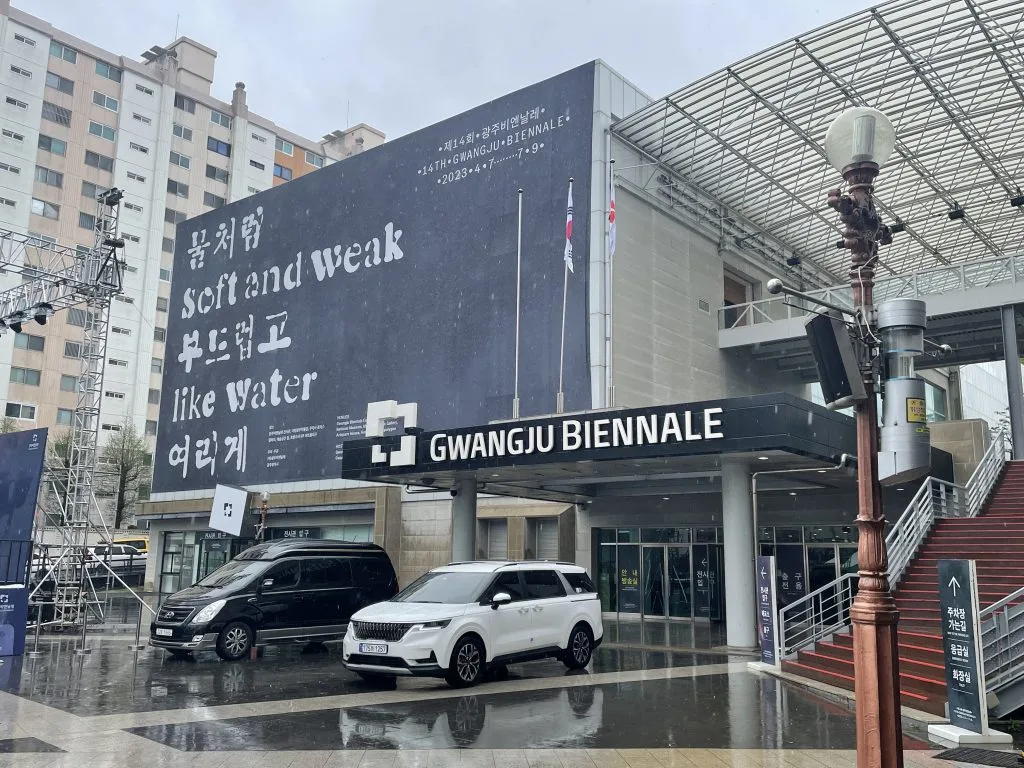

The Gwangju Biennale Foundation has reversed course, agreeing with Taiwan’s culture ministry to officially name the country’s exhibition the “Taiwan Pavilion” — reinstating a title that had briefly been swapped out for “NTMoFA Pavilion,” a reference to the exhibit’s organizing institution, the National Taiwan Museum of Fine Arts. Many read that earlier rename as a deliberate act of suppression; the foundation insisted it was purely administrative.
Announcing the reversal, the foundation said it had also directed the pavilion’s venue, the Asia Cultural Center, to grant entry to the Taiwanese exhibitors — who say they’d been shut out of the space since August 18, pushing their installation timeline more than a week behind schedule. Taiwan’s culture ministry issued a formal protest over the exclusion on August 15, claiming the foundation had even floated moving Taiwan’s exhibition into a smaller storage space, a move the ministry characterized as a deliberate attempt to obstruct the show.
That August 15 statement — the one that first put the naming dispute on the international radar — framed the episode as part of a much larger pattern, warning against “major powers” that “are increasingly using diplomatic pressure and economic resources to interfere beyond their borders.” Beijing regards Taiwan as a breakaway province and has repeatedly signaled its intent to force reunification. Researchers have long tracked this kind of pressure campaign extending beyond China’s own borders, a pattern now widely referred to as transnational repression.
On Monday, 38 artists and curators participating in next month’s 16th Gwangju Biennale published an open letter backing the Taiwanese team. “Art institutions should not become instruments for suppressing how people identify themselves,” the letter read, arguing that restricting a group’s right to name itself, without adequate explanation, goes beyond administrative housekeeping — it’s a question of who gets to decide how a group is represented in public. Signatories included 16 artists from the biennale’s main exhibition and representatives from twelve national pavilions, including Indonesia, Brazil, France, Poland, and Malta. Among the higher-profile names attached: the Indian collective CAMP, which showed at MoMA last year; Geumhyung Jeong, who’s exhibited at Tate Modern and the 2022 Venice Biennale; South Korean filmmaker Park Chan-kyong; and rising Seoul artist Dew Kim.
The foundation had initially defended the rename in an August 19 statement, arguing that NTMoFA had registered as an institutional participant rather than as a national pavilion — a distinction that, under a pavilion designation, would have required a formal letter of approval from Taiwan’s embassy or culture ministry. By that logic, the foundation framed the change as a technical matter of “participant classification and naming conventions.” In its latest statement on August 25, the foundation said it had just received and approved that official letter from Taiwan’s culture ministry, confirming NTMoFA’s status representing Taiwan at the biennale and clearing the way to restore the “Taiwan Pavilion” name.